



The Special Intensive Revision (SIR) of electoral rolls in Karnataka has become the center of a major political and administrative controversy. The dispute primarily revolves around allegations of procedural violations and structural flaws in how voter data is being updated.
1. The Core Allegations: Bypassing Protocol
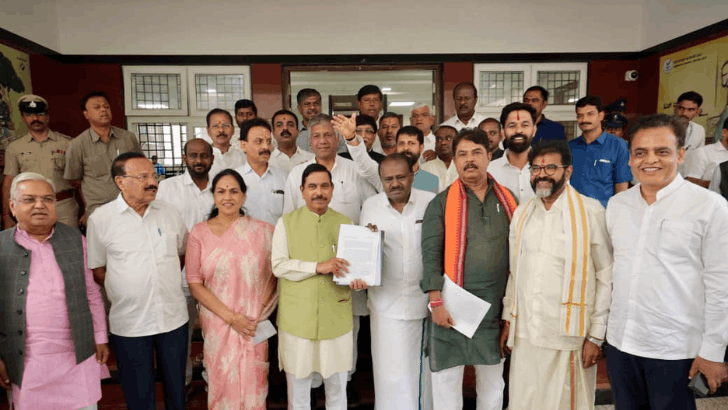
A high-level delegation of National Democratic Alliance (NDA) leaders—including Union Ministers H.D. Kumaraswamy, Pralhad Joshi, and Shobha Karandlaje—filed a formal complaint with Karnataka’s Chief Electoral Officer (CEO), V. Anbu Kumar.
The primary allegations include:
- Abandonment of Door-to-Door Verification: Under standard SIR guidelines, Booth Level Officers (BLOs) are strictly mandated to conduct physical, door-to-door visits to verify the identities of residents in every household. The opposition alleges this rule is being completely ignored.
- Mass Enrolment Hubs: Instead of home visits, opposition leaders claim that BLOs have been filling out enumeration forms collectively at centralized locations, such as community halls, religious places (like mosques), and private residences.
- Use of WhatsApp Groups: The complaint states that localized WhatsApp groups were being used to instruct specific groups of people to gather at these centralized hubs for mass registration, which critics argue compromises the neutrality and integrity of the electoral roll.
- Inclusion of Illegal Immigrants: The opposition further alleged that these makeshift mass camps were being used by certain political factions to facilitate the illegal inclusion of undocumented immigrants into the voter base.
2. Technical Concerns: The “Logical Descrepancy” Catagories
Beyond the ground-level execution, the SIR process in Karnataka has faced technical scrutiny regarding how data mismatches are flagged. Following templates from other states, the Election Commission utilizes a framework to spot “logical discrepancies” when comparing current voter logs against historical data (such as the last major SIR in 2002).
Up to 11 discrepancy categories can trigger automated red flags, which critics worry could lead to mass voter notices or wrongful deletions if not handled carefully. These categories include:
- Anomalous age gaps (e.g., less than a 15-year or more than a 50-year age gap between parent and child).
- Less than a nine-month age gap between listed siblings.
- Discrepancies in a relative’s name or type (such as a woman listed under her father’s name in 2002 but her husband’s name now, which applies to millions of married women).
- Accounts linked with zero documents or using Aadhaar as the sole unverified document.
3. The Government’s Response
The Congress-led Karnataka government, represented by Deputy Chief Minister D.K. Shivakumar and other leadership, strongly dismissed the allegations of rigging and misconduct:
- No State Interference: The ruling party asserted that the state government does not interfere with the independent functions of the Election Commission’s SIR process.
- Opposition “Fear of Awareness”: Government leaders argued that the opposition is raising alarms simply because the state successfully created massive public awareness about registering to vote. They stated the drive aims to ensure vulnerable populations and minorities are not excluded from their democratic rights.
- Challenge on Claims: Responding to the “illegal immigrant” narrative, the leadership challenged the opposition to provide concrete proof of undocumented individuals being added, pointing out that no action was taken during the opposition’s previous tenure.
4. Current Administrative Action
Following intense media coverage and public complaints, local administrations have begun taking disciplinary actions to safeguard the process. For example, in districts like Kolar, the District Commissioner issued official show-cause notices to several Tahsildars, Assistant Electoral Registration Officers, and Booth Level Officers (BLOs) for severe lapses and dereliction of duty regarding the mandated door-to-door verification rules.
The Election Commission is under pressure from opposition parties to order a comprehensive inquiry and enforce strict door-to-door re-verification of all submitted forms across the state before the final electoral rolls are published