



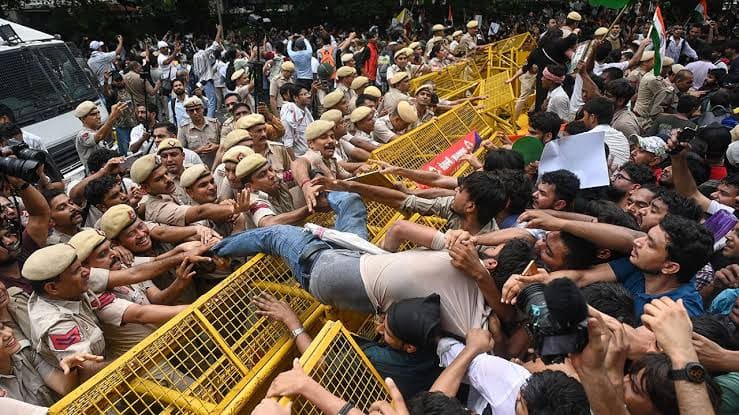
Student demonstrations in New Delhi have gained significant national attention, centering primarily on systemic issues affecting youth, such as exam leaks, educational regulatory failures, and safety concerns at private coaching hubs.
Key Highlights
- Background and Core Grievances: The demonstrations were triggered by widespread dissatisfaction over irregularities in national competitive exams (such as NEET-UG) and severe urban safety oversights affecting student hubs in areas like Old Rajinder Nagar and Mukherjee Nagar.
- The “Cockroach Janta Party” (CJP) Movement: Originating as a satirical youth-led campaign, the “Cockroach Janta Party” (CJP) evolved into a visible activist platform. Symbolizing how students feel overlooked by administrative machinery, the movement has organized sit-ins at Jantar Mantar and rallies across the capital demanding structural exam reforms and official accountability.
- Political Involvement and Blame Game:
- Opposition Parties: Major opposition parties, including the Indian National Congress and regional outfits, have lent formal support to the protests, raising the issues in Parliament and organizing solidarity demonstrations across the country.
- Government & Ruling Coalition Counter-Claims: Representatives from the ruling administration have alleged that opposition parties are seeking political mileage from the situation and treating student concerns as props for political campaigns.
- Allegations of Paid Protesters: Social media platforms and political opponents frequently float claims alleging that protesting students are paid or covertly funded by political outfits
Rising from the Ashes: How a Satirical Student Movement Turned Delhi into Ground Zero for India’s Education Crisis
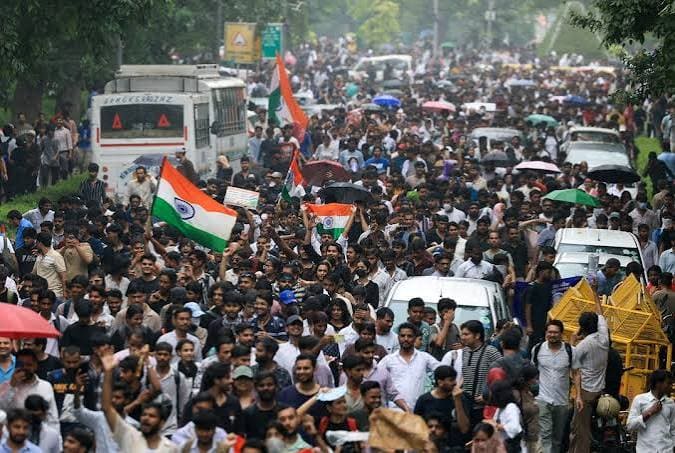
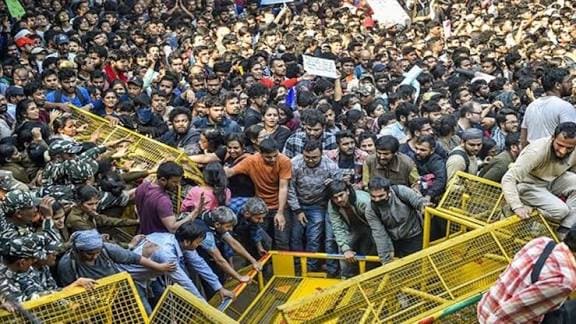
What began as an tongue-in-cheek online subversion has metastasized into one of the most formidable youth uprisings in modern Indian history. Swarming Central Delhi’s iconic Jantar Mantar and choking every major artery leading to Parliament, thousands of Gen-Z protesters—under the banner of the Cockroach Janta Party (CJP)—have brought the capital to a virtual standstill.
Demanding the immediate resignation of Union Education Minister Dharmendra Pradhan and a structural overhaul of the country’s examination machinery, the youth movement continues to defy police crackdowns, water cannons, tear gas, and blistering monsoon heat.
The Genesis: From Social Media Satire to a National Outrage
The Cockroach Janta Party’s origins are as unconventional as its nomenclature. Conceived barely two months ago by 30-year-old political strategist Abhijeet Dipke, the movement took root as a humorous response to controversial remarks by a senior judicial officer referring to unemployed youth taking up activism as “cockroaches and parasites.”
Online Satire
(Google Forms & Memes)
│
▼
Mass Outrage
(NEET Leaks & Suicides)
│
▼
Jantar Mantar Siege
(Gen-Z Street Protest)
What was initially floated as a mock platform exploded almost overnight. A simple sign-up drive yielded tens of thousands of responses, transforming a satirical jab into a potent outlet for widespread youth disillusionment over sky-high unemployment and systemic corruption in state exams.
The Trigger: The NEET Paper Leak Fiasco
- Scale: Nearly 2.28 million aspirants sat for the prestigious National Eligibility cum Entrance Test (NEET) on May 3, following years of grueling preparation.
- The Cancelation: Allegations of widespread paper leaks led to the sudden annulment of the exam, forcing candidates into high-stress resits under armed security.
- The Human Cost: The turmoil triggered severe mental health crises across student hubs, with student groups alleging at least 20 candidate suicides linked directly to the distress.
Escalation: Hunger Strikes, Crackdowns, and Political Fallout
The situation intensified following the involvement of renowned engineer and activist Sonam Wangchuk, who initiated an indefinite hunger strike at Jantar Mantar in solidarity with the students. On Saturday, police forcibly hospitalized the 59-year-old fast-observer, igniting widespread anger and accelerating the call for a national march.
| Event / Location | Key Developments | Impact / Police Action |
| Jantar Mantar Base | Thousands gather; makeshift encampments erected. | Dismantled by police; protesters remain on site around the clock. |
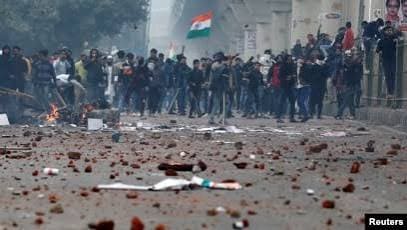
| Parliament March / Raisina Road | Demonstrators push through barricades demanding systemic reform. | Baton charges (lathi charge) & tear gas deployed; scores injured on both sides. |
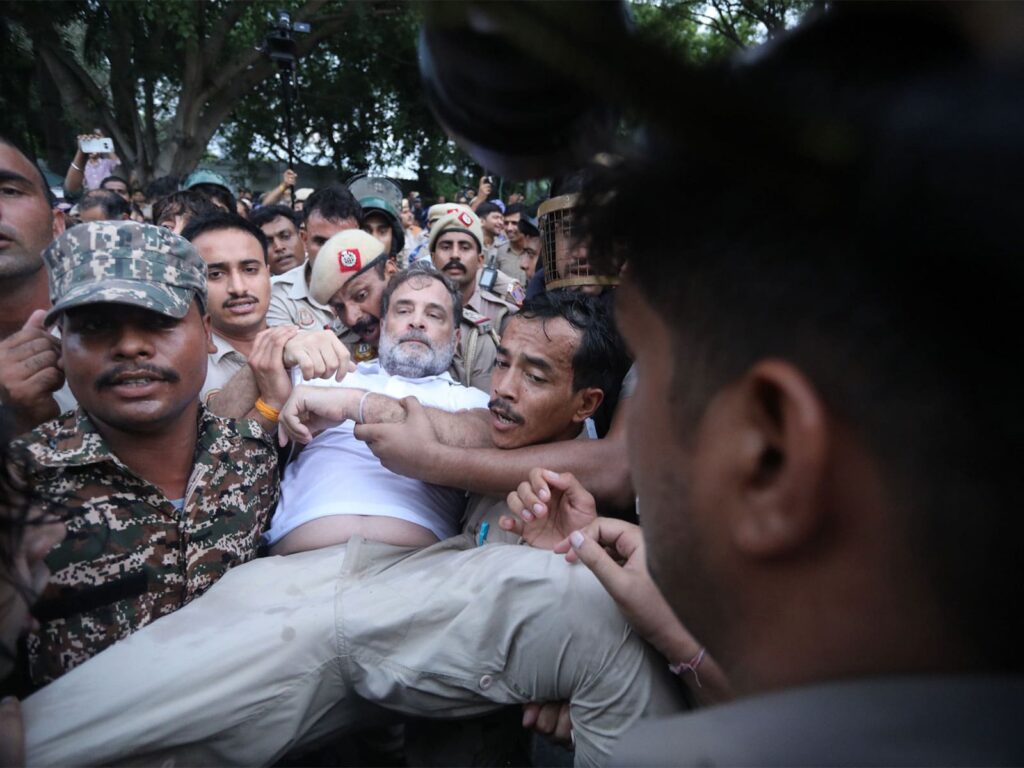
| Lok Kalyan Marg (PM Residence) | Opposition leaders (Congress) stage demonstration protesting police action. | Rahul Gandhi & Priyanka Gandhi Vadra detained in police buses, later released. |
| Thiruvananthapuram (Kerala) | SDPI workers march on Lok Bhavan chanting “Inquilab Zindabad”. | Dispersed by Kerala Police using high-pressure water cannons. |
On the Ground: Grace Beneath the Tear Gas
While mainstream broadcasts captured the high-octane clashes between law enforcement and protesters, the atmosphere on the asphalt revealed a distinct generational character—one marked by solidarity and restraint.
“We are here for justice, not violence.”
— A CJP protester forming a human shield to protect media personnel at Jantar Mantar.
During the height of the chaotic tear-gas deployment along Raisina Road, student volunteers routinely stepped in to offer water, masks, and aid to journalists caught in the crossfire. Even as torrential monsoon rains swept through the capital, young demonstrators shielded onlookers and news crews, insisting their stories be told to the nation.
The Political Counter-Offensive
Responding to the political uproar, Union Education Minister Dharmendra Pradhan hit back at the Opposition, accusing the Indian National Congress of “shamelessly exploiting students as political tools.”
- Government Position: Maintained readiness for parliamentary debate, alleging the Opposition prioritized “political spectacle over democratic solutions.”
- Opposition Position: Countered that parliamentary discussions were systematically blocked, forcing elected representatives to take their grievances to the Prime Minister’s doorstep.
As the standoff between the youth and the state deepens, the Cockroach Janta Party has transcended its satirical origins, forcing a high-stakes national reckoning on how India educates, tests, and employs its next generation.
Thousands of supporters of India’s youth-led “cockroach” movement protested in Delhi on Tuesday, a day after violent clashes with police, and in spite of Prime Minister Narendra Modi’s vow to punish those behind damaging exam leaks.
More than 5,000 protesters gathered at Delhi’s Jantar Mantar protest site, after their march on parliament to demand the resignation of Education Minister Dharmendra Pradhan ended in violent clashes with police on Monday.